
How Much Does It Cost to Clear a Lot for a House in Tennessee?
National cost guides put lot clearing at about $1,200 to $8,000 per acre. Brushy ground sits at the low end of that range. Thick woods with large trees sit at the top.
For the house site alone, two national guides land near $1,000 to $4,000 for the clearing. Grading and permits come on top of that. These are market numbers from published guides, not our price list. None of the national guides we read lists Tennessee on its own.
Our page on site preparation for a new house covers the work itself.
What does it cost to clear an acre in Tennessee?
The biggest drivers are how thick the growth is and how easy the lot is to reach. One national cost guide breaks it down like this:
| What is on the ground | Published range per acre |
|---|---|
| Light: underbrush and small trees | $1,200 to $2,500 |
| Moderate: thicker brush and medium trees | $2,500 to $4,500 |
| Heavy: dense woods and large trees | $4,500 to $8,000 |
| All land types | $1,200 to $8,000 |
A second national guide is built from 2,416 finished jobs. It puts the average land clearing job at $3,779. Most of those jobs fell between $1,396 and $6,173.
What does it cost to clear a lot for a house?
The first guide prices clearing by lot size:
| Lot size | Published range |
|---|---|
| 1/4 acre | $800 to $3,000 |
| 1/2 acre | $1,000 to $5,000 |
| 1 acre | $1,200 to $8,000 |
| 2 acres | $1,900 to $15,000 |
| 5 acres | $4,500 to $35,000 |
A wooded lot costs more than a brushy lot of the same size. The second guide puts a lightly wooded half acre at $250 to $1,000. A densely wooded half acre runs $1,800 to $2,800.
National guides list topsoil stripping, grading, digging and hauling as the next costs on a building lot.
What else adds to the cost of a house lot?
The first five lines below come from national cost guides. The last two are fees set by the state environment agency.
| Add-on | Published cost |
|---|---|
| Stump grinding or removal, when a stump has to go | $100 to $400 per stump |
| Removing a tree, if one has to come down | $400 to $1,200 per tree |
| Grading a small home site on mostly level ground | $2,000 to $5,000 |
| Hauling debris off the lot | about $135 per cubic yard |
| A land survey | $500 to $1,500 or more |
| State septic permit, new conventional system up to 1,000 gallons a day | $400, plus a $100 inspection |
| State stormwater permit, 1 acre to just under 5 acres disturbed | $250, and no state fee under 1 acre |
Rock can push grading much higher. The first guide says it can pass $50,000 with rocky soil or large boulders. Around McMinnville, the most common soil in the federal soil survey is very deep and well drained. Around Crossville, on the Cumberland Plateau, about a third is shallow soil over sandstone.
Under the house pad and the drive, stumps and big roots come out. Out in the yard, stumps can often be mulched flush and left. We pull stumps where the ground allows and rough-grade with the buckets, which is light excavation work.
What happens to the brush and logs?
One national guide notes that some contractors include disposal in the price and others charge extra for it. The four common choices:
- Haul it off. Hauling is priced by the cubic yard, as in the table above.
- Burn it. From October 15 through May 15, burning a brush pile takes a state burn permit. The Tennessee Division of Forestry issues it for one day at a time. Some counties and cities set stricter rules.
- Pile it. Logs and brush can be pushed to the edge of the lot and left there.
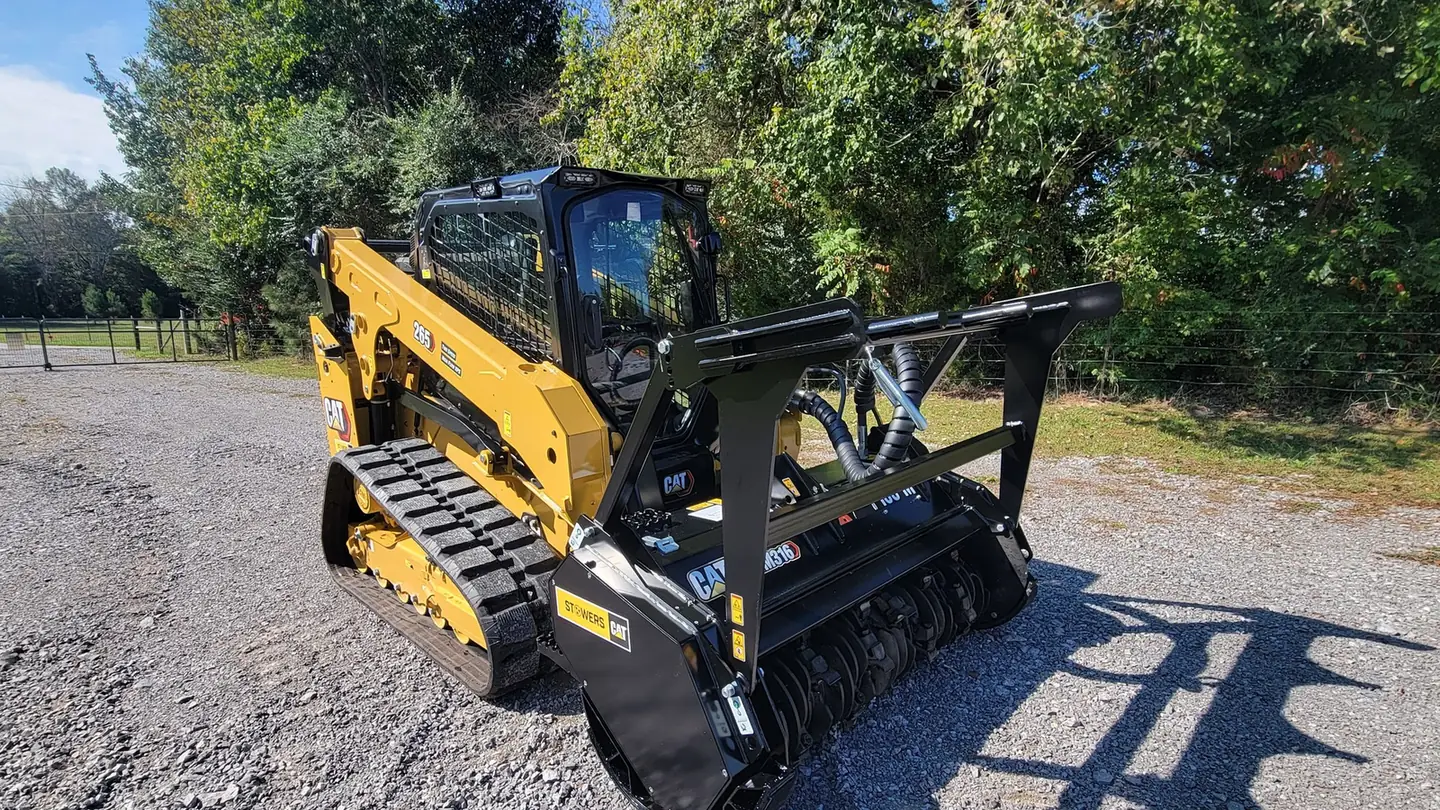
- Mulch it in place. Forestry mulching grinds brush and small trees where they stand. The mulch stays on the ground, so there is nothing to haul or burn.
Under the house pad, expect your builder to want the mulch and roots scraped off. Our guide to what forestry mulching costs per acre has the market numbers for that method.
What does the permit office ask before you clear?
It depends on the lot’s size and whether it has sewer. Our guide to whether you need a permit to clear land in Tennessee goes through the state, city and county rules one by one.
- A septic site visit, if there is no sewer. A state environmental scientist visits first to set the type of septic system. Before that visit, the state asks for the property lines marked and the four corners of the house pad staked. Grass and brush around the house site and the soil test areas should be mowed. The soil itself should not be disturbed yet.
- Stormwater coverage at one acre. Clearing, grading, filling or digging on one acre or more needs the state’s construction stormwater permit. The state’s form says to file at least 30 days before the ground is disturbed. Cookeville and Tullahoma run their own programs inside city limits.
- Streams and wetlands. Work that disturbs or alters a stream or a wetland needs a separate state permit. The state calls it an Aquatic Resource Alteration Permit.
- The building permit. Rules differ from county to county. Ask the county or city codes office what it needs to see on the lot.
- Tennessee 811. Tennessee law asks anyone who digs to notify Tennessee 811 at least three working days before the work starts. Grading and digging both fall under the law’s wording. Utilities do not mark private lines, like a well line or a line out to a barn.
What order do the steps go in?
- Have the lot surveyed and the corners marked. Ask the surveyor if a path needs to be cut first.
- Settle the house pad and the drive with your builder, then stake them.
- Cut the grass and brush low around the house site and the soil test areas. Leave the soil alone.
- If there is no sewer, get the septic site visit done. The state’s review can take up to 45 days.
- File any stormwater permit, and call 811 at least three working days before digging.
- Clear the pad and the drive, and leave the trees you want to keep.
- Pull the stumps where the house and the drive go, then rough-grade so water runs away from the house site.
- Hand the lot to your builder for the final grade and the footings.
What should the lot look like when the builder shows up?
Before the clearing starts, ask your builder how much working room they want around the pad. Ask where trucks will turn around.
A lot ready for the builder has the pad and the drive cleared. The stumps are out and the dirt piles are moved. The ground is rough-graded so water drains away from the house site. The trees you chose to keep are still standing.
Planning a house lot around McMinnville?
F and S Enterprises clears and preps lots about 60 miles around McMinnville, across Middle Tennessee. We mulch brush and small trees off the building area and the drive. Then we clean up stumps and dirt piles with the buckets and the grapple, and rough-grade the ground.
See our lot clearing and site prep services for how a job runs. We look at the property and put the quote in writing before the work starts. Call or text (831) 236-5783.